
English| EUR
Suggested for you
More currencies
Choose a language
Parksville's whale watching tours welcome families, but the question of bringing infants requires understanding both operator policies and the marine environment itself. Most tours departing from French Creek Marina permit babies, though each family must weigh safety factors that go beyond a simple age cutoff.
Quick answer
Yes, babies can go whale watching in Parksville—most operators departing from French Creek Marina allow infants of all ages, though they recommend children be at least six months old for safety and comfort. Tours operate daily from 00:00 to 23:59, with morning departures between 08:00 and 12:00 offering calmer seas. Families must provide their own infant life jackets in appropriate sizes, as standard vessel equipment typically starts at 30 pounds.
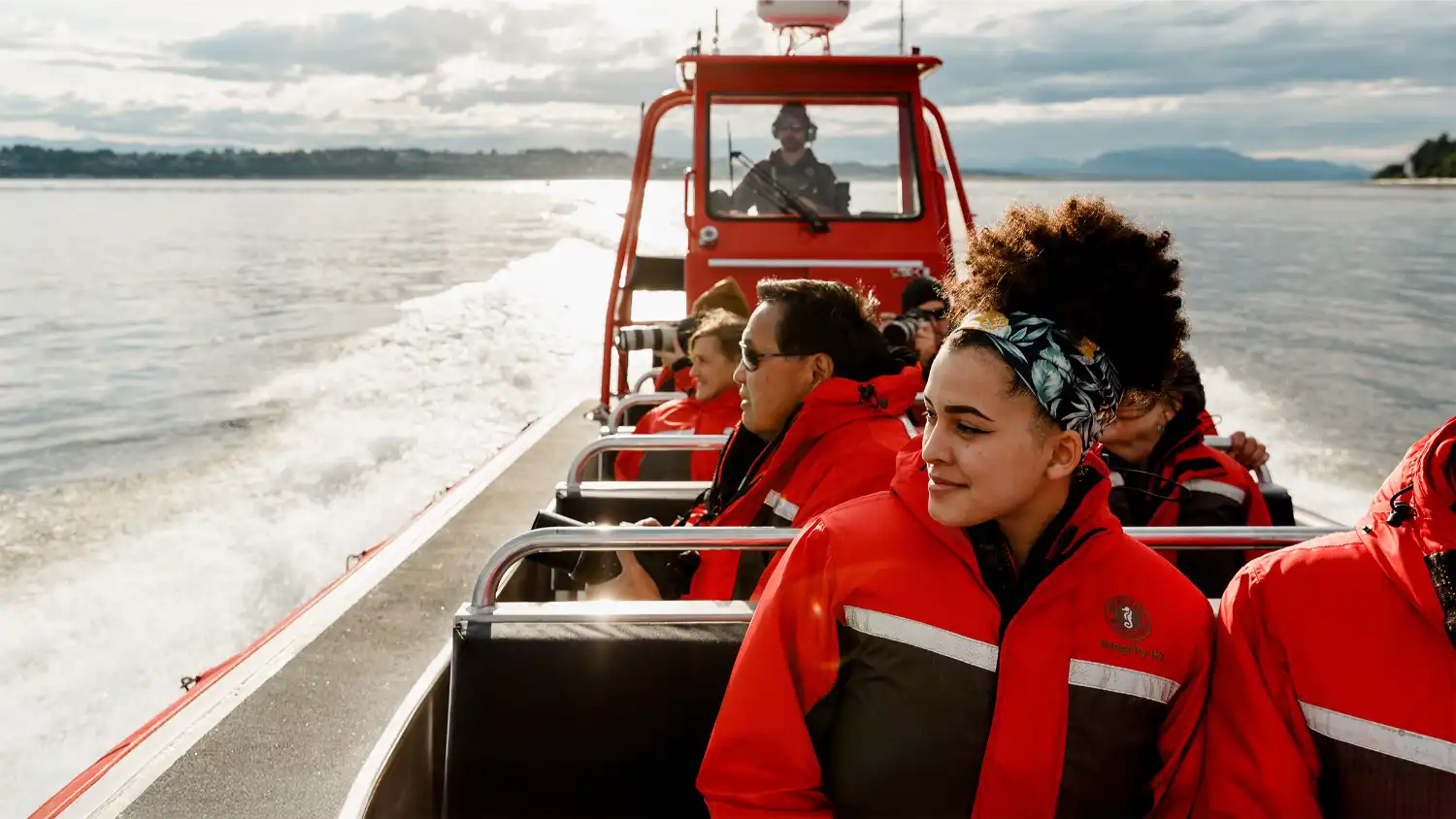
The Strait of Georgia produces some of the most reliable whale sightings on the Pacific coast, but it remains open ocean—subject to swell, wind chop, and the abrupt motion that comes with tracking marine mammals. Most Parksville operators set no hard age floor, yet the practical threshold sits around six months, when neck strength and immune development make the offshore environment less precarious. Infant life jackets complicate the equation. Transport Canada mandates that every passenger wear a properly fitted personal flotation device while underway, and vessels rarely stock jackets small enough for babies under 20 pounds. Families bringing young children must source their own Coast Guard–approved infant PFDs and confirm fit before departure. The requirement is non-negotiable, and tours will not board a child without appropriate flotation. Noise and duration shape the experience as much as age. Zodiac-style rigid inflatables produce sustained engine noise and deliver a percussive ride over even modest chop, while larger covered vessels offer enclosed cabins that buffer sound and weather. Most whale watching excursions in the Parksville area run two to three hours, a span that challenges nap schedules and diaper logistics. Operators provide no changing tables, and below-deck facilities are compact. Parents manage feeding, soothing, and hygiene in a space designed for adults in foul-weather gear. The question of whether infants should go whale watching hinges less on permission than on the family's tolerance for unpredictability. Seas forecast as calm can turn lumpy. Sightings promised as likely sometimes fail to materialize, leaving a boat offshore for extended search time. Babies react to motion, cold spray, and strangers in close quarters, and once the vessel clears the breakwater, the commitment is made. Families who bring infants on these tours do so knowing the environment will not adjust to the child—preparation and flexibility must come entirely from the parents.
“Transport Canada mandates that every passenger wear a properly fitted personal flotation device while underway, and vessels rarely stock jackets small enough for babies under 20 pounds.”
Bringing infants on whale watching excursions requires careful consideration of vessel conditions and safety regulations. Operators prioritize passenger security, but marine travel presents unique challenges for the youngest travelers.
Check with your operator regarding minimum age policies, as these vary based on vessel type and current safety regulations for infants.
Marine travel involves unpredictable motion which can be difficult for infants; holding an infant securely in a carrier or on your lap is required for the duration of the trip.
Engine noise and wind can be intense, so bring protective ear protection for infants and be prepared to move to a quieter area of the vessel if needed.
Facilities on board are limited, so ensure you have all necessary feeding supplies, diapers, and extra layers for rapidly changing marine temperatures packed in a soft-sided bag.
The best arrival window is 08:00–12:00, as morning trips provide calmer waters and higher wildlife activity before afternoon winds develop. Choosing this time helps ensure a more stable experience for families with infants.
Warm, stable, 18°C–22°C. High activity ensures frequent sightings.
Cooler, 10°C–16°C. Consistent whale sightings during migration periods.
—; Calm waters and lower wind speeds characterize these early sessions.
Verdict: The best slot for a family trip is weekday mornings between 08:00 and 12:00 during the shoulder season months of May or September.
Boarding vessels at French Creek Marina requires navigating docks and boat transitions that may present challenges for mobility aids. Families with infants should anticipate uneven surfaces and narrow passages when moving between the pier and the vessel.
The marina docks are accessible, but boarding vessels involves steps and transitions that vary by tide level.
Paved paths exist at the marina, but gangways onto boats often require negotiating steps or steep inclines.
No mechanical lifts are available for vessel boarding at this location.
Standard washroom facilities are available at the French Creek Marina site.
No specialized visual or auditory equipment is provided during the tours.
Please contact the operator directly to discuss quieter departure times or lower capacity options.
Preparation ensures comfort and safety for both baby and parents during your whale watching trip.
Whale watching tours departing from French Creek Marina operate daily throughout the week. Guests may schedule their departure at any time during these operational hours.
There is no standalone gate fee for the marina at French Creek. Costs associated with whale watching are specific to tour bookings.
Verdict: Adults pay for individual tour bookings, with the final cost dependent on the specific excursion package selected through the official site.
Everything you need to know about can babies go whale watching
Yes, can babies go whale watching in Parksville when accompanied by an adult, though operators have specific safety guidelines. Parents should verify if the vessel is suitable for their youngest travelers before booking.
Most operators have specific policies regarding minimum ages for marine expeditions. You should check the official provider details to ensure can babies go whale watching safely on their particular craft.
Safety is the priority, so can babies go whale watching only when life jackets and stability protocols are met. Always inquire about the sea conditions expected on the day of your scheduled trip.
Entrance fee is 0 CAD for the marina itself, but tour operators may have their own infant pricing policies. You must confirm directly with the provider since there is no standalone gate entrance fee for the area.
The best arrival window is 08:00–12:00, as morning hours offer calmer waters for young families. This period typically provides higher wildlife activity and avoids the stronger afternoon winds.
To ensure can babies go whale watching comfortably, bring appropriate sun protection and extra layers for the ocean breeze. Preparing for the specific marine environment will help manage the experience effectively for your little one.